INDUSTRY:
INDUSTRY:
FASHION & APPAREL
FASHION & APPAREL
ENGAGEMENT:
ENGAGEMENT:
VIVID FRAMES
VIVID FRAMES
YEAR:
YEAR:
2025
2025
SOFTWARE:
SOFTWARE:
BLENDER, SUBSTANCE PAINTER
BLENDER, SUBSTANCE PAINTER
ROLE:
ROLE:
3D MODELLING, TEXTURING,VISUALIZATION
3D MODELLING, TEXTURING,VISUALIZATION

AIR
JORDAN
AIR
JORDAN
AIR
JORDAN
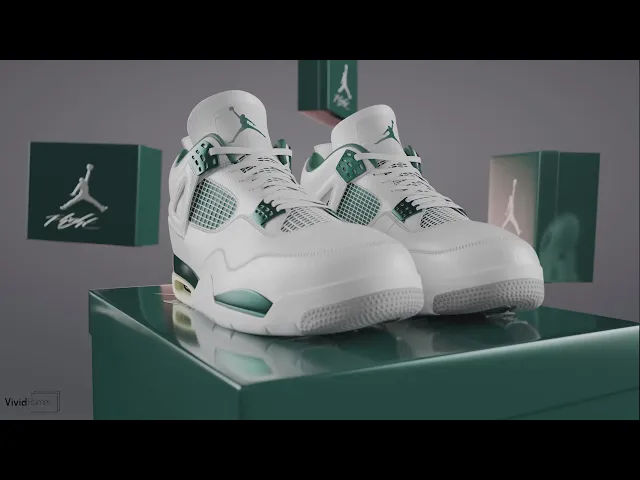
Air Jordan is a product visualization project created to explore procedural animation techniques in Blender, combining Geometry Nodes, modifiers, cloth simulation, and material masking with detailed product modelling and texturing.
The project focused on recreating the shoe to a high level of visual accuracy before developing a series of procedural effects that reveal, transform, and deconstruct different parts of the product.
Air Jordan is a product visualization project created to explore procedural animation techniques in Blender, combining Geometry Nodes, modifiers, cloth simulation, and material masking with detailed product modelling and texturing.
The project focused on recreating the shoe to a high level of visual accuracy before developing a series of procedural effects that reveal, transform, and deconstruct different parts of the product.
Air Jordan is a product visualization project created to explore procedural animation techniques in Blender, combining Geometry Nodes, modifiers, cloth simulation, and material masking with detailed product modelling and texturing.
The project focused on recreating the shoe to a high level of visual accuracy before developing a series of procedural effects that reveal, transform, and deconstruct different parts of the product.
Air Jordan is a product visualization project created to explore procedural animation techniques in Blender, combining Geometry Nodes, modifiers, cloth simulation, and material masking with detailed product modelling and texturing.
The project focused on recreating the shoe to a high level of visual accuracy before developing a series of procedural effects that reveal, transform, and deconstruct different parts of the product.


The 3D modelling stage was the most time-consuming part of the project. Reference images of the actual product were sourced from Nike's online store and used to recreate the shoe from the sole upward.
Care was taken to accurately reproduce the proportions, individual components, surface construction, lace system, sole geometry, stitching areas, logos, and smaller design features of the original product.
The 3D modelling stage was the most time-consuming part of the project. Reference images of the actual product were sourced from Nike's online store and used to recreate the shoe from the sole upward.
Care was taken to accurately reproduce the proportions, individual components, surface construction, lace system, sole geometry, stitching areas, logos, and smaller design features of the original product.
The 3D modelling stage was the most time-consuming part of the project. Reference images of the actual product were sourced from Nike's online store and used to recreate the shoe from the sole upward.
Care was taken to accurately reproduce the proportions, individual components, surface construction, lace system, sole geometry, stitching areas, logos, and smaller design features of the original product.
The 3D modelling stage was the most time-consuming part of the project. Reference images of the actual product were sourced from Nike's online store and used to recreate the shoe from the sole upward.
Care was taken to accurately reproduce the proportions, individual components, surface construction, lace system, sole geometry, stitching areas, logos, and smaller design features of the original product.
After modelling, the shoe was taken into Substance 3D Painter for texturing. Normal and height maps were used to add fine surface information that would have been difficult to represent through geometry alone. The textures were produced at 8K resolution and subsequently applied to the model in Blender.
After modelling, the shoe was taken into Substance 3D Painter for texturing. Normal and height maps were used to add fine surface information that would have been difficult to represent through geometry alone. The textures were produced at 8K resolution and subsequently applied to the model in Blender.
After modelling, the shoe was taken into Substance 3D Painter for texturing. Normal and height maps were used to add fine surface information that would have been difficult to represent through geometry alone. The textures were produced at 8K resolution and subsequently applied to the model in Blender.
After modelling, the shoe was taken into Substance 3D Painter for texturing. Normal and height maps were used to add fine surface information that would have been difficult to represent through geometry alone. The textures were produced at 8K resolution and subsequently applied to the model in Blender.
A combination of cloth simulation, lattice deformation, and proximity-based modifiers was used to create the transformation of floating matter into the shoe's sole.
A combination of cloth simulation, lattice deformation, and proximity-based modifiers was used to create the transformation of floating matter into the shoe's sole.
A combination of cloth simulation, lattice deformation, and proximity-based modifiers was used to create the transformation of floating matter into the shoe's sole.
A combination of cloth simulation, lattice deformation, and proximity-based modifiers was used to create the transformation of floating matter into the shoe's sole.
Geometry Nodes was used to create procedural reveal effects for both the outer and inner sections of the shoe. This allowed different layers and components to appear progressively while maintaining control over the timing and visual behaviour of the animation.
Geometry Nodes was used to create procedural reveal effects for both the outer and inner sections of the shoe. This allowed different layers and components to appear progressively while maintaining control over the timing and visual behaviour of the animation.
Geometry Nodes was used to create procedural reveal effects for both the outer and inner sections of the shoe. This allowed different layers and components to appear progressively while maintaining control over the timing and visual behaviour of the animation.
Geometry Nodes was used to create procedural reveal effects for both the outer and inner sections of the shoe. This allowed different layers and components to appear progressively while maintaining control over the timing and visual behaviour of the animation.


Close-up camera shots were used to capture these effects at a scale where the procedural details could be clearly observed.
Close-up camera shots were used to capture these effects at a scale where the procedural details could be clearly observed.
Close-up camera shots were used to capture these effects at a scale where the procedural details could be clearly observed.
Close-up camera shots were used to capture these effects at a scale where the procedural details could be clearly observed.


The stitching sequence was created using a combination of Geometry Nodes and material masking.
The procedural setup allowed the sewing elements to appear progressively along the shoe surface, while material masks controlled where the effect was revealed and helped integrate the stitching into the textured surface.
The stitching sequence was created using a combination of Geometry Nodes and material masking.
The procedural setup allowed the sewing elements to appear progressively along the shoe surface, while material masks controlled where the effect was revealed and helped integrate the stitching into the textured surface.
The stitching sequence was created using a combination of Geometry Nodes and material masking.
The procedural setup allowed the sewing elements to appear progressively along the shoe surface, while material masks controlled where the effect was revealed and helped integrate the stitching into the textured surface.
The stitching sequence was created using a combination of Geometry Nodes and material masking.
The procedural setup allowed the sewing elements to appear progressively along the shoe surface, while material masks controlled where the effect was revealed and helped integrate the stitching into the textured surface.
The unrolling of the sole patch was also created procedurally with Geometry Nodes, giving the element a controlled unfolding motion as part of the product reveal.
The unrolling of the sole patch was also created procedurally with Geometry Nodes, giving the element a controlled unfolding motion as part of the product reveal.
The unrolling of the sole patch was also created procedurally with Geometry Nodes, giving the element a controlled unfolding motion as part of the product reveal.
The unrolling of the sole patch was also created procedurally with Geometry Nodes, giving the element a controlled unfolding motion as part of the product reveal.
Particular attention was given to the sole and its smaller construction details. The detailing on the rear section of the sole was modelled manually to closely match the reference product, allowing the geometry to be incorporated into the later reveal sequence.
Particular attention was given to the sole and its smaller construction details. The detailing on the rear section of the sole was modelled manually to closely match the reference product, allowing the geometry to be incorporated into the later reveal sequence.
Particular attention was given to the sole and its smaller construction details. The detailing on the rear section of the sole was modelled manually to closely match the reference product, allowing the geometry to be incorporated into the later reveal sequence.
Particular attention was given to the sole and its smaller construction details. The detailing on the rear section of the sole was modelled manually to closely match the reference product, allowing the geometry to be incorporated into the later reveal sequence.


Multiple close-up camera shots were incorporated throughout the animation to showcase the procedural effects and surface details.
Rather than presenting the shoe only through wide product shots, the camera moves closer to the model to reveal the stitching, material textures, sole details, and procedural transformations.
Multiple close-up camera shots were incorporated throughout the animation to showcase the procedural effects and surface details.
Rather than presenting the shoe only through wide product shots, the camera moves closer to the model to reveal the stitching, material textures, sole details, and procedural transformations.
Multiple close-up camera shots were incorporated throughout the animation to showcase the procedural effects and surface details.
Rather than presenting the shoe only through wide product shots, the camera moves closer to the model to reveal the stitching, material textures, sole details, and procedural transformations.
Multiple close-up camera shots were incorporated throughout the animation to showcase the procedural effects and surface details.
Rather than presenting the shoe only through wide product shots, the camera moves closer to the model to reveal the stitching, material textures, sole details, and procedural transformations.
The entire scene was lit using HDRI environment textures, providing the illumination and reflections, used throughout the product presentation.
The entire scene was lit using HDRI environment textures, providing the illumination and reflections, used throughout the product presentation.
The entire scene was lit using HDRI environment textures, providing the illumination and reflections, used throughout the product presentation.
The entire scene was lit using HDRI environment textures, providing the illumination and reflections, used throughout the product presentation.
The project served as an exploration of how procedural techniques could be combined with conventional 3D workflows to create more complex product animations.
The project served as an exploration of how procedural techniques could be combined with conventional 3D workflows to create more complex product animations.
The project served as an exploration of how procedural techniques could be combined with conventional 3D workflows to create more complex product animations.
The project served as an exploration of how procedural techniques could be combined with conventional 3D workflows to create more complex product animations.

