INDUSTRY:
INDUSTRY:
AGRITECH
AGRITECH
ENGAGEMENT:
ENGAGEMENT:
INNOV8HUB
INNOV8HUB
YEAR:
YEAR:
2025
2025
SOFTWARE:
SOFTWARE:
BLENDER
BLENDER
ROLE:
ROLE:
VISUALIZATION
VISUALIZATION

AGRO
MECH
AGRO
MECH
AGRO
MECH
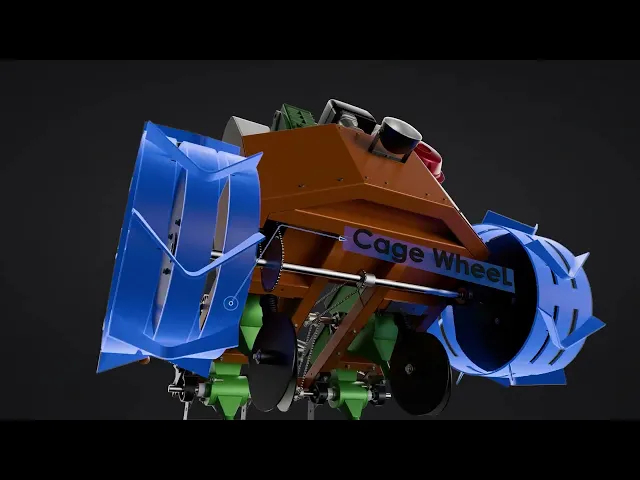
AgroMech is a motorised, hand-guided agricultural planter designed to improve the efficiency and consistency of planting operations. The prototype was developed by Engr. Abubakar Yusuf and his team from the Federal College of Education, Katsina through the TETFAIR programme.
The project combines a compact, manually guided form factor with a mechanised planting system capable of planting two rows simultaneously, providing a practical approach to reducing the time and physical effort involved in conventional planting.
AgroMech is a motorised, hand-guided agricultural planter designed to improve the efficiency and consistency of planting operations. The prototype was developed by Engr. Abubakar Yusuf and his team from the Federal College of Education, Katsina through the TETFAIR programme.
The project combines a compact, manually guided form factor with a mechanised planting system capable of planting two rows simultaneously, providing a practical approach to reducing the time and physical effort involved in conventional planting.
AgroMech is a motorised, hand-guided agricultural planter designed to improve the efficiency and consistency of planting operations. The prototype was developed by Engr. Abubakar Yusuf and his team from the Federal College of Education, Katsina through the TETFAIR programme.
The project combines a compact, manually guided form factor with a mechanised planting system capable of planting two rows simultaneously, providing a practical approach to reducing the time and physical effort involved in conventional planting.
AgroMech is a motorised, hand-guided agricultural planter designed to improve the efficiency and consistency of planting operations. The prototype was developed by Engr. Abubakar Yusuf and his team from the Federal College of Education, Katsina through the TETFAIR programme.
The project combines a compact, manually guided form factor with a mechanised planting system capable of planting two rows simultaneously, providing a practical approach to reducing the time and physical effort involved in conventional planting.


The CAD files used for the visualization were provided by Nnaemeka Godwin from the Design Team at Innov8 Hub. These files served as the foundation for recreating the physical prototype as a detailed 3D asset for visualization and presentation. The supplied CAD model was imported into Blender and prepared for visualization and animation. The model was textured with materials appropriate to the prototype's different components, including its metal, rubber, and mechanical elements. Material properties were adjusted to achieve a realistic representation while maintaining the visual clarity required for technical presentation and animation.
The CAD files used for the visualization were provided by Nnaemeka Godwin from the Design Team at Innov8 Hub. These files served as the foundation for recreating the physical prototype as a detailed 3D asset for visualization and presentation. The supplied CAD model was imported into Blender and prepared for visualization and animation. The model was textured with materials appropriate to the prototype's different components, including its metal, rubber, and mechanical elements. Material properties were adjusted to achieve a realistic representation while maintaining the visual clarity required for technical presentation and animation.
The CAD files used for the visualization were provided by Nnaemeka Godwin from the Design Team at Innov8 Hub. These files served as the foundation for recreating the physical prototype as a detailed 3D asset for visualization and presentation. The supplied CAD model was imported into Blender and prepared for visualization and animation. The model was textured with materials appropriate to the prototype's different components, including its metal, rubber, and mechanical elements. Material properties were adjusted to achieve a realistic representation while maintaining the visual clarity required for technical presentation and animation.
The CAD files used for the visualization were provided by Nnaemeka Godwin from the Design Team at Innov8 Hub. These files served as the foundation for recreating the physical prototype as a detailed 3D asset for visualization and presentation. The supplied CAD model was imported into Blender and prepared for visualization and animation. The model was textured with materials appropriate to the prototype's different components, including its metal, rubber, and mechanical elements. Material properties were adjusted to achieve a realistic representation while maintaining the visual clarity required for technical presentation and animation.

A custom callout system was developed with Geometry Nodes to identify and highlight individual components during the animation. The system allowed labels and visual indicators to be positioned around the machine while keeping the presentation organised and easy to follow.
A custom callout system was developed with Geometry Nodes to identify and highlight individual components during the animation. The system allowed labels and visual indicators to be positioned around the machine while keeping the presentation organised and easy to follow.
A custom callout system was developed with Geometry Nodes to identify and highlight individual components during the animation. The system allowed labels and visual indicators to be positioned around the machine while keeping the presentation organised and easy to follow.
A custom callout system was developed with Geometry Nodes to identify and highlight individual components during the animation. The system allowed labels and visual indicators to be positioned around the machine while keeping the presentation organised and easy to follow.

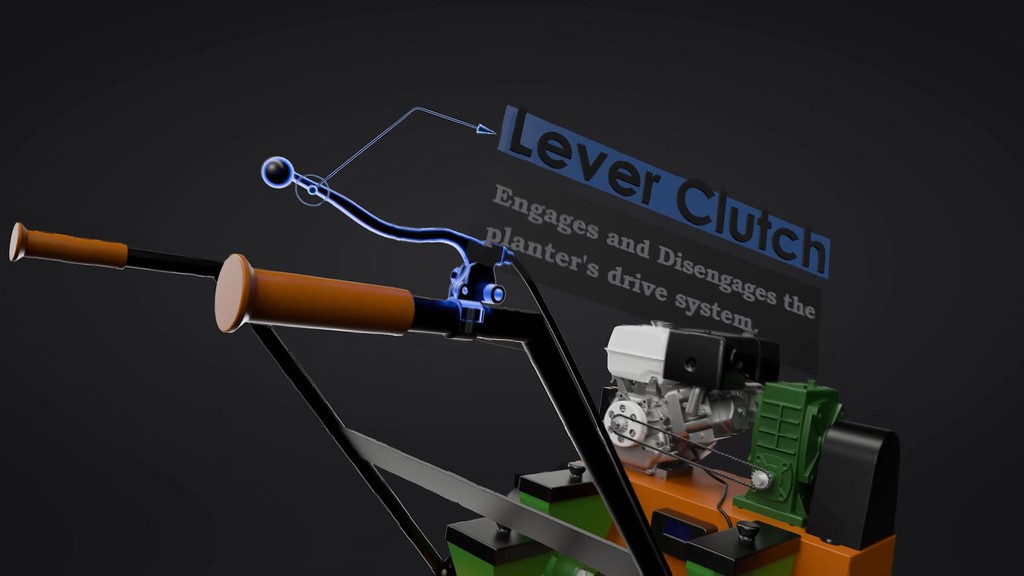

The chain and drive mechanism were rigged and animated to demonstrate the mechanical power transfer through the machine. The animation follows the motion from the motor through the drive system and wheel, while also illustrating how the mechanical system drives the planting and metering mechanism.
The chain and drive mechanism were rigged and animated to demonstrate the mechanical power transfer through the machine. The animation follows the motion from the motor through the drive system and wheel, while also illustrating how the mechanical system drives the planting and metering mechanism.
The chain and drive mechanism were rigged and animated to demonstrate the mechanical power transfer through the machine. The animation follows the motion from the motor through the drive system and wheel, while also illustrating how the mechanical system drives the planting and metering mechanism.
The chain and drive mechanism were rigged and animated to demonstrate the mechanical power transfer through the machine. The animation follows the motion from the motor through the drive system and wheel, while also illustrating how the mechanical system drives the planting and metering mechanism.
The planting and metering mechanism was animated to communicate how the drive system translates rotational motion into the operation of the planter. This helped make the internal mechanical relationship between the drive components and planting system visible during the presentation.
The planting and metering mechanism was animated to communicate how the drive system translates rotational motion into the operation of the planter. This helped make the internal mechanical relationship between the drive components and planting system visible during the presentation.
The planting and metering mechanism was animated to communicate how the drive system translates rotational motion into the operation of the planter. This helped make the internal mechanical relationship between the drive components and planting system visible during the presentation.
The planting and metering mechanism was animated to communicate how the drive system translates rotational motion into the operation of the planter. This helped make the internal mechanical relationship between the drive components and planting system visible during the presentation.

Geometry Nodes were also used to create procedural simulations of the planter interacting with the soil. The simulation visualised the movement of the cage wheels across the ground and the action of the furrower/openers, including the opening and closing of the soil as the planter moves through the field.
Geometry Nodes were also used to create procedural simulations of the planter interacting with the soil. The simulation visualised the movement of the cage wheels across the ground and the action of the furrower/openers, including the opening and closing of the soil as the planter moves through the field.
Geometry Nodes were also used to create procedural simulations of the planter interacting with the soil. The simulation visualised the movement of the cage wheels across the ground and the action of the furrower/openers, including the opening and closing of the soil as the planter moves through the field.
Geometry Nodes were also used to create procedural simulations of the planter interacting with the soil. The simulation visualised the movement of the cage wheels across the ground and the action of the furrower/openers, including the opening and closing of the soil as the planter moves through the field.
A character was rigged and animated to physically interact with and move the AgroMech prototype. The character's movement was synchronised with the machine's mechanical rig, allowing the wheels and other moving components to respond in sync as the prototype travelled through the scene. This helped create a more cohesive representation of the machine's operation and interaction.
A character was rigged and animated to physically interact with and move the AgroMech prototype. The character's movement was synchronised with the machine's mechanical rig, allowing the wheels and other moving components to respond in sync as the prototype travelled through the scene. This helped create a more cohesive representation of the machine's operation and interaction.
A character was rigged and animated to physically interact with and move the AgroMech prototype. The character's movement was synchronised with the machine's mechanical rig, allowing the wheels and other moving components to respond in sync as the prototype travelled through the scene. This helped create a more cohesive representation of the machine's operation and interaction.
A character was rigged and animated to physically interact with and move the AgroMech prototype. The character's movement was synchronised with the machine's mechanical rig, allowing the wheels and other moving components to respond in sync as the prototype travelled through the scene. This helped create a more cohesive representation of the machine's operation and interaction.
My role focused on the 3D visualization and visual presentation of the AgroMech prototype. I worked from the provided CAD data to develop the presentation-ready 3D assets and create visual content that communicated the design and physical characteristics of the machine.
My role focused on the 3D visualization and visual presentation of the AgroMech prototype. I worked from the provided CAD data to develop the presentation-ready 3D assets and create visual content that communicated the design and physical characteristics of the machine.
My role focused on the 3D visualization and visual presentation of the AgroMech prototype. I worked from the provided CAD data to develop the presentation-ready 3D assets and create visual content that communicated the design and physical characteristics of the machine.
My role focused on the 3D visualization and visual presentation of the AgroMech prototype. I worked from the provided CAD data to develop the presentation-ready 3D assets and create visual content that communicated the design and physical characteristics of the machine.
This project is presented on this portfolio with permission from Engr. Abubakar Yusuf and his team. The permission covers the use of the project and related visuals for the purpose of documenting and showcasing my contribution to its development.
The images, video clips, animations, and other visual materials presented in this case study may not be reproduced, redistributed, modified, commercially used, or presented as another person's work without prior authorization. Unauthorized use, reproduction, redistribution, or representation of these materials is prohibited.
This project is presented on this portfolio with permission from Engr. Abubakar Yusuf and his team. The permission covers the use of the project and related visuals for the purpose of documenting and showcasing my contribution to its development.
The images, video clips, animations, and other visual materials presented in this case study may not be reproduced, redistributed, modified, commercially used, or presented as another person's work without prior authorization. Unauthorized use, reproduction, redistribution, or representation of these materials is prohibited.
This project is presented on this portfolio with permission from Engr. Abubakar Yusuf and his team. The permission covers the use of the project and related visuals for the purpose of documenting and showcasing my contribution to its development.
The images, video clips, animations, and other visual materials presented in this case study may not be reproduced, redistributed, modified, commercially used, or presented as another person's work without prior authorization. Unauthorized use, reproduction, redistribution, or representation of these materials is prohibited.
This project is presented on this portfolio with permission from Engr. Abubakar Yusuf and his team. The permission covers the use of the project and related visuals for the purpose of documenting and showcasing my contribution to its development.
The images, video clips, animations, and other visual materials presented in this case study may not be reproduced, redistributed, modified, commercially used, or presented as another person's work without prior authorization. Unauthorized use, reproduction, redistribution, or representation of these materials is prohibited.

